 Hardware Ready Ready to Bench?
On November 13, OpenAI launched ChatGPT Wallet, a digital wallet designed to allow its AI agents – named “dot” – to complete purchases on behalf of the user without directly accessing sensitive card data. The system was developed in collaboration with American Express, Mastercard, and Visa.
Currently, service availability is limited to the United States and reserved exclusively for subscribers to the ChatGPT Pro plan (a monthly subscription starting at $100) who have a US billing address and a Visa, Mastercard, or American Express card issued in the United States.
ChatGPT Wallet: why it matters
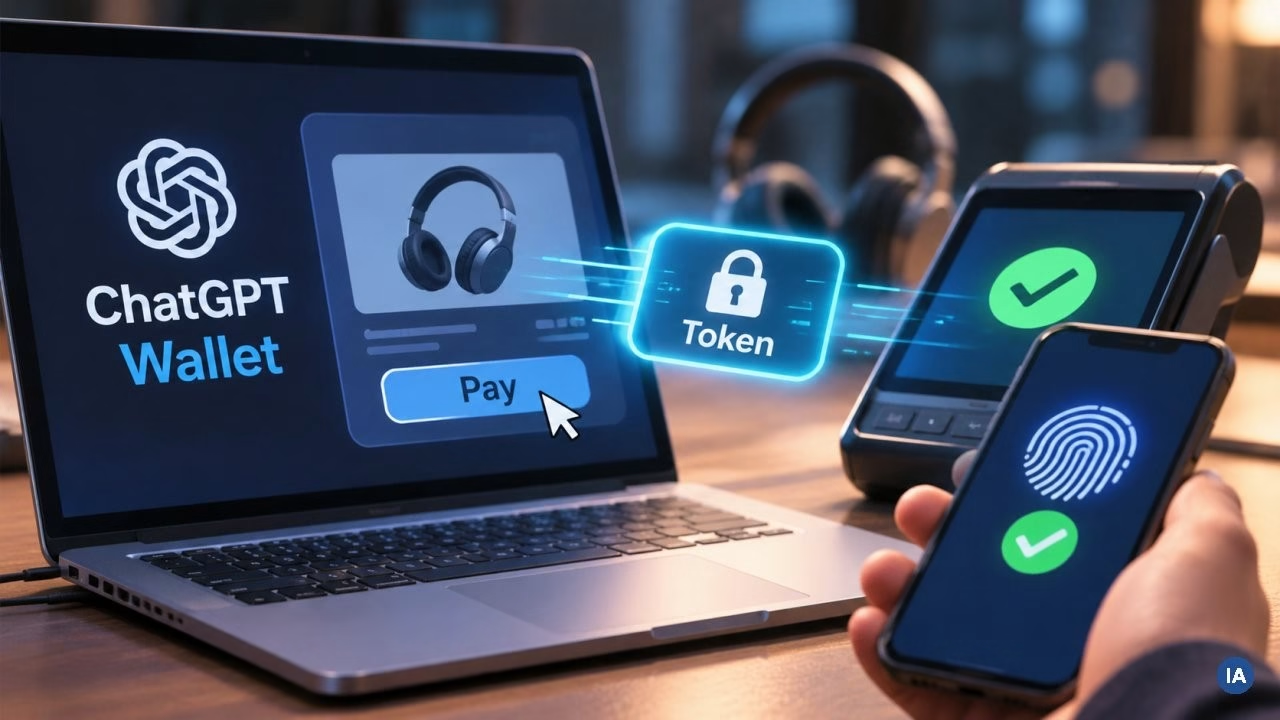
The process involves the user asking their AI agent to assist in selecting and purchasing a product. The card is added to the system only once, eliminating the need to re-enter data for each transaction. Before executing the payment, the user can review the selected items, the total amount, and the credit card used, then confirm the operation via a biometric authentication mechanism such as Face ID or fingerprint scanning. Each approval generates a detailed record of the permissions granted to the AI agent.
OpenAI defines Wallet as the first wallet that allows agents to make payments without accessing real card data and requires security control for every transaction. Once approval is obtained, the payment network issues a unique token in place of sensitive card data, including an identification number, a security code, and an expiration date. The charge is made on the user-selected card, ensuring that neither the AI agent nor the merchant has access to actual data.
The company compares this mechanism to contactless payment systems, Apple Pay, and Google Wallet. Merchants receive the details necessary to fulfill the order, such as shipping address and contact information. Benefits derived from using the card (rewards) and protections in case of disputes (for example, for defective products) remain unchanged, while price management, deliveries, returns, and customer service remain the responsibility of the seller.
Tokenization, loyalty programs, and dispute protections are features already offered by the most widespread digital wallets. The innovative aspect of Wallet lies in the ability to delegate tasks to AI agents, a function that is not yet fully implemented. OpenAI expects that in the future users will be able to entrust the agent with complete purchase management, defining parameters such as spending limits, specific product categories, or predefined time periods, and pre-authorizing it with enhanced security measures, including biometric checks and clear authorization logs. Currently, every transaction still requires explicit user approval.
The initial limited launch aims to collect data on real-world service usage and improve system compatibility and reliability in collaboration with companies, banks, and payment networks. Luke Gebb, American Express’s global innovation lead, emphasized that this is a deliberate choice: “It makes sense to observe how the system works, start from a confined environment, and then gradually expand it.”
OpenAI warns that some websites may inadvertently block purchases made by AI agents, and that fraud prevention systems may erroneously flag legitimate transactions as suspicious, causing order rejection or cancellation. To address these issues, OpenAI has published the “Commerce Partner Playbook,” a detailed guide for businesses illustrating how to allow agent access through firewalls, upload product feeds, and create business profiles within ChatGPT.
What changes and what are the effects
The company is also collaborating with several fraud prevention solution providers (Forter, Riskified, Sardine, Signifyd) and payment processors (Adyen, Checkout.com, Stripe). Chaya Nayak, OpenAI’s product lead for monetization and payments, highlighted that the main goal is to “focus on merchants and network partners, building a solid, secure, and easy-to-use foundation.”
Some retailers have already taken specific positions: Amazon prevents AI agents from making purchases on its platform, as it did in 2026 with Muse, the AI agent developed by Meta, likely to direct users toward its own voice assistant Alexa. United Airlines announced that it will block the use of AI agents in airline ticket bookings, while Schwab and JPMorgan will exclude them from their customers’ financial operations. Walmart is adopting a different approach, experimenting with agent profiles equipped with personalized spending limits.
Demand for the service is currently limited. In the last week of October, Uber received four rides and 500 orders via Uber Eats from AI agents, out of a total of approximately 320 million rides and deliveries. DoorDash’s CEO reported recording “perhaps a few hundred orders,” while Airbnb described the number of bookings made through AI assistants as “very insignificant.” An exception is Muse, which counts over 10 million users where assisted shopping represents one of the main activities.
A survey conducted by the American Bankers Association in October revealed that 77% of respondents expressed concern at the idea of granting an AI agent permission to make payments, and 61% consider it unlikely they would entrust autonomous account management to it within the next 12 months. Visa, in November, tested 22 AI agent models in the role of buyers, finding a failure rate of 42.8%. OpenAI had already experimented with Instant Checkout within ChatGPT, but this feature was quickly abandoned.
Source and further reading on ChatGPT Wallet: original article.
* Content created with the assistance of artificial intelligence systems.