 Hardware Ready Ready to Bench?
mobile human gene. Researchers at Cornell University have identified gene BC200, a human genetic element with the peculiar ability to insert itself into new positions within the genome while maintaining a cellular function.
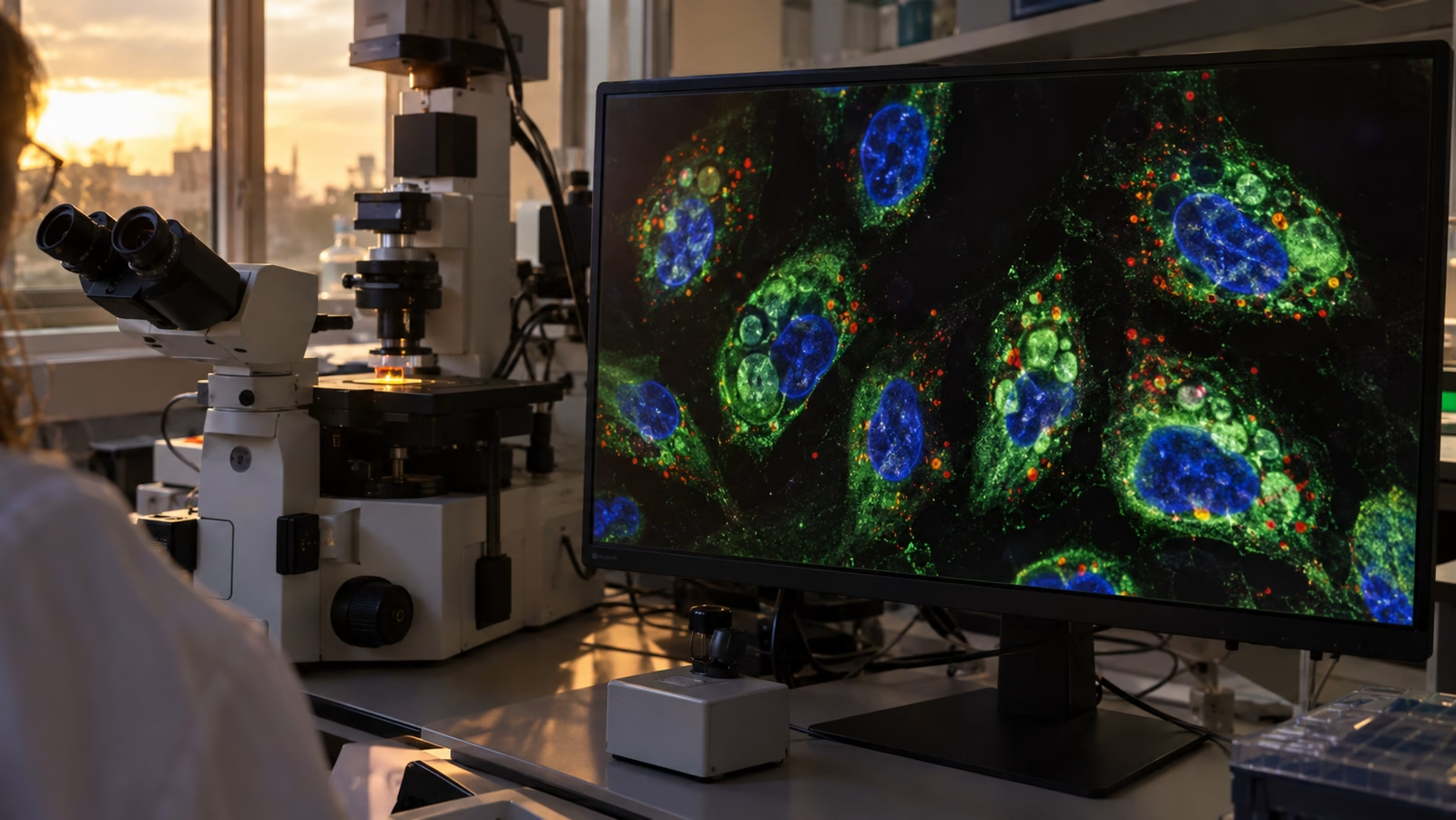
The study, published in the journal Science, highlights how BC200, particularly expressed in neurons, combines two characteristics never before observed together in a human gene: it derives from a mobile genetic element but has not lost its biological functionality.
mobile human gene: why it matters
The discovery stemmed from the identification of a human genetic sequence within the molluscum contagiosum virus (MCV), a poxvirus. By analyzing this sequence, the team recognized BC200 and reconstructed its ability to move and integrate into genomes.
Researchers hypothesize that the transfer to the virus may have occurred during an infection of skin cells, the only known cells infected by MCV. BC200 was identified in the late 1980s as a non-coding RNA abundant in human neurons.
The gene produces an RNA molecule that appears to contribute to regulating the translation of neuronal messenger RNAs into proteins, influencing how the cell uses genetic instructions. This suggests that a gene can acquire a cellular function without relinquishing its ability to move within the genome, raising new questions about the origin of mutations.
The evolutionary history of BC200 dates back millions of years and originates in transposons, genetic elements capable of inserting themselves into new positions in the genome. About half of the human genome consists of DNA derived from these elements, which are mostly inactive today. Only a small fraction retains the ability to move and copy itself.
Insertions can interfere with gene function, but over the course of evolution, they can also provide material for new biological functions. According to Cedric Feschotte, senior author of the study, mobile elements repurposed by the organism for a cellular function generally lose their ability to transpose.
What changes and what are the effects
BC200 retains both properties and is present only in humans and closely related primates. The transfer of mobile elements from cells to viruses has precedents in other species, observed in the late 1980s in moth cells cultured in the laboratory and in a baculovirus that infects insects.
BC200 is expressed at low levels even in germline cells, sperm, and eggs, opening the possibility that new insertions could be transmitted to subsequent generations. The research group also intends to investigate whether MCV uses the acquired genetic material to manipulate human cells for its own advantage.
The gene shows abnormal expression in some tumors, including breast cancer, and high levels in the brains of people with Alzheimer’s disease. The study does not establish that its mobility causes these conditions. One of the next steps will be to search for any active movements of BC200 in tumor cells and determine if they produce mutations, thereby linking gene expression to a possible mechanism of genome alteration.
Source and further reading on mobile human gene: original article.
* Content created with the assistance of artificial intelligence systems.