 Hardware Ready Ready to Bench?
REM sleep brain energy. A team from Tohoku University has observed an apparent energetic paradox in mice during the REM phase of sleep, which is closely linked to dreams. In this phase, an increase in cerebral blood volume is recorded, accompanied by a decrease in ATP available for neurons.
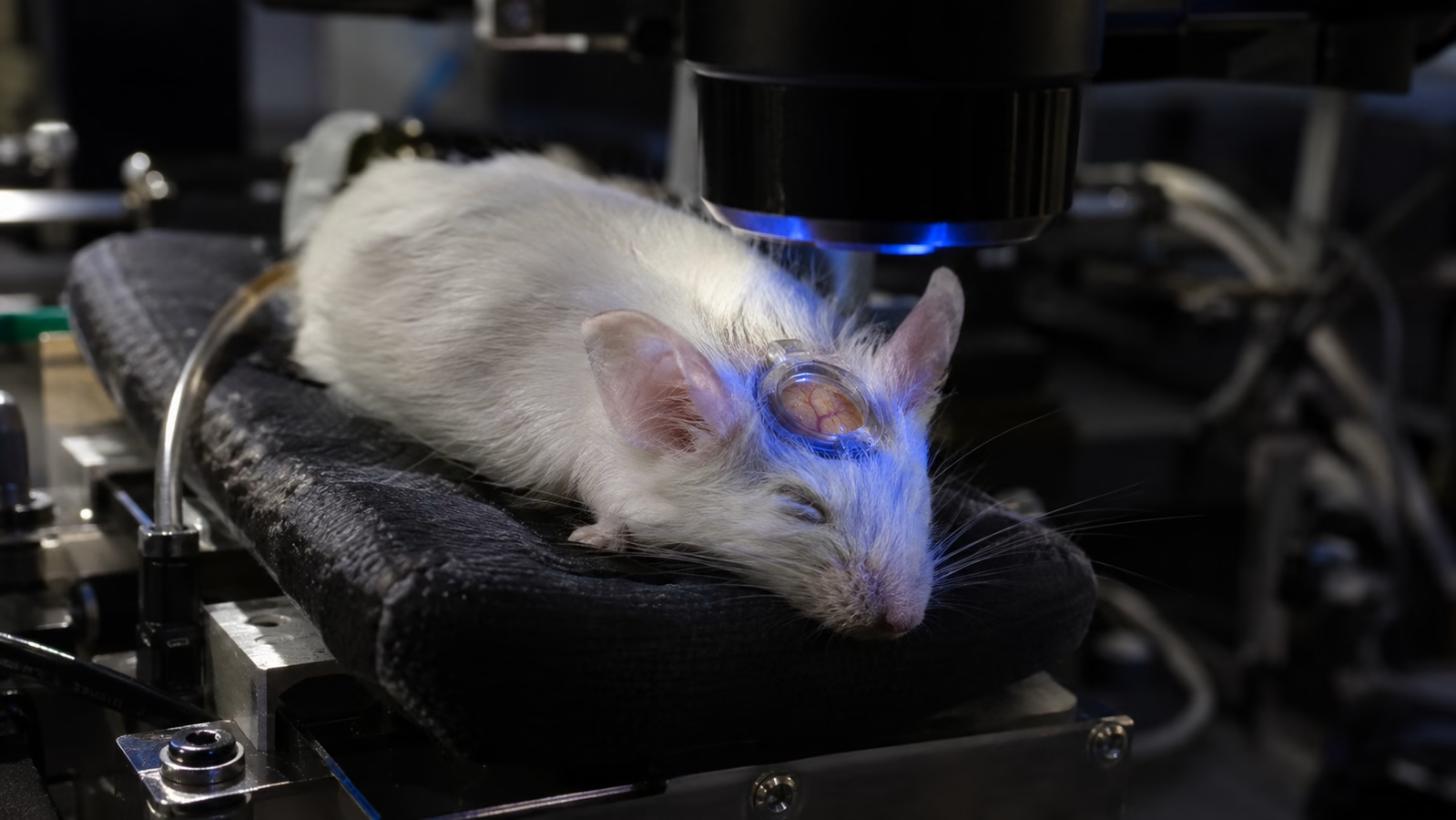
The results, published in Communications Biology, provide a tool for studying how the brain manages its resources during dream activity. To monitor these changes in natural sleep, researchers made the mice’s skulls transparent using a resin hardened with ultraviolet light.
REM sleep brain energy: why it matters
Through images obtained via wide-field fluorescence, variations in cerebral blood volume were measured, used as an indicator of resource supply to tissues. Simultaneously, two substances involved in the metabolism of brain cells were detected: ATP, the molecule that directly provides energy to neurons, and pyruvate present in astrocytes, cells that participate in cerebral metabolism.
During REM sleep, pyruvate levels in astrocytes increased, a finding consistent with both greater availability of metabolic resources and increased activity in glucose transformation. During the same period, ATP measured in neurons decreased.
The brain receives more blood during REM sleep, but neurons show less ATP: this could indicate a change in energy balance while circuits process memories. The tools used also allowed observation of what happens before REM sleep begins.
In non-REM sleep, small oscillations of cerebral activity in the theta wave band anticipated changes in blood volume by several seconds. According to researchers, this sequence suggests that vessels adapt to changes in neuronal activity and metabolic demand even during other phases of sleep.
The transition to REM sleep showed a different dynamic. Approximately 50 seconds before the start of the phase, defined by classical criteria, cerebral blood volume began to grow. The increase started from the posterior cortex and then extended toward anterior regions, suggesting a metabolic preparation distributed across much of the brain.
What changes and what are the effects
The decrease in neuronal ATP can be explained in several ways: neurons might consume more to reorganize connections between them or to support exchanges between the hippocampus and cortex related to memory processing. Researchers also consider possible changes in resource transfer from astrocytes to neurons or in ATP production by mitochondria.
The measurements describe the observed energy balance but do not identify which of these processes determines it. The group led by Yusuke Takahashi interprets REM sleep as an opportunity to examine how the brain distributes energy among different activities, rather than maintaining uniform availability. This perspective fits into studies on memory consolidation, one of the functions associated with sleep.
Since the experiments involve mice, the results do not establish whether a particularly vivid dream consumes more energy in the human brain.
Source and further reading on REM sleep brain energy: original article.
* Content created with the assistance of artificial intelligence systems.