 Hardware Ready Ready to Bench?
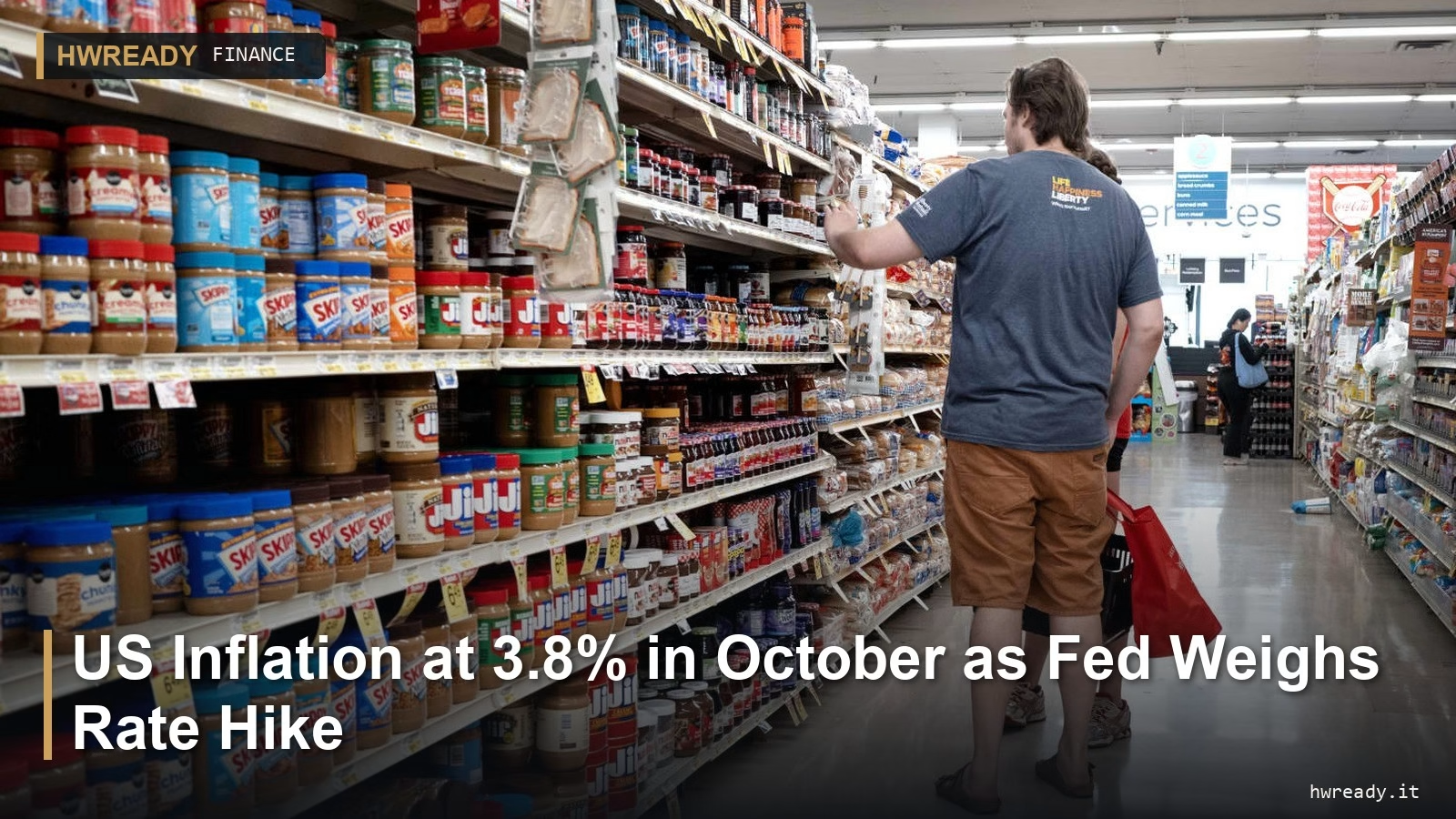
The US Department of Commerce released data for the Personal Consumption Expenditures (PCE) price index for October, the measure preferred by the Federal Reserve to monitor inflation. The annual rate stood at 3.8%, in line with Dow Jones consensus expectations. Compared to September, total PCE recorded an increase of 0.1%. Core PCE, which excludes food and energy, also rose by 0.1% on a monthly basis, bringing the annual rate to 3.3%, slightly above analyst estimates.
Why it matters
Inflation remains significantly above the 2% target set by the Federal Reserve. According to reports from previous meeting minutes, some council members warned that further delays in raising rates risked making high inflation structural or would require more drastic tightening in the future. Current price pressure is attributed to several factors: new trade tariffs announced by the White House on 14 partners, including China, the European Union, and Japan, and strong demand linked to artificial intelligence development. Chris Rupkey, Chief Economist at Fwdbonds, commented that inflation will not be brought under control as long as economic demand remains equally strong. Heather Long, Chief Economist at Navy Federal Credit Union, added that the problem is broader than a simple energy shock.
The numbers
- Annual PCE inflation: 3.8%.
- Annual core PCE inflation: 3.3%.
- GDP growth in the third quarter (revised estimate): 4.3% annualized.
- Initial jobless claims for the week ending November 21: 189,000, a decrease of 13,000 units from the previous week.
- Market movements on the morning of November 25: Nasdaq -4%, S&P 500 -2.5%, Dow Jones -2%. By the end of the day, losses had narrowed, with the Dow Jones closing positive at 0.33%.
What remains to be understood
Markets await the Federal Reserve’s decision for the December 8-9 meeting. Market expectations indicate a possible interest rate hike of 25 basis points, but it is not yet clear by how much rates must increase further to bring inflation back to the 2% target. Additionally, uncertainty persists over whether the impact of tariffs and supply shocks will become permanent or remain temporary. The upward revision of third-quarter GDP, driven by investment and consumer spending, suggests a resilient economy that could complicate monetary policy management.
This article is for informational purposes only and does not constitute financial advice or an investment recommendation.
* Content created with the assistance of artificial intelligence systems.