 Hardware Ready Ready to Bench?
car voice command test. Voice control systems in automobiles still encounter difficulties, particularly when it comes to delicate functions. A test conducted by ADAC revealed that 32 out of 40 cars received an insufficient rating for managing visibility devices and assistance systems via voice.
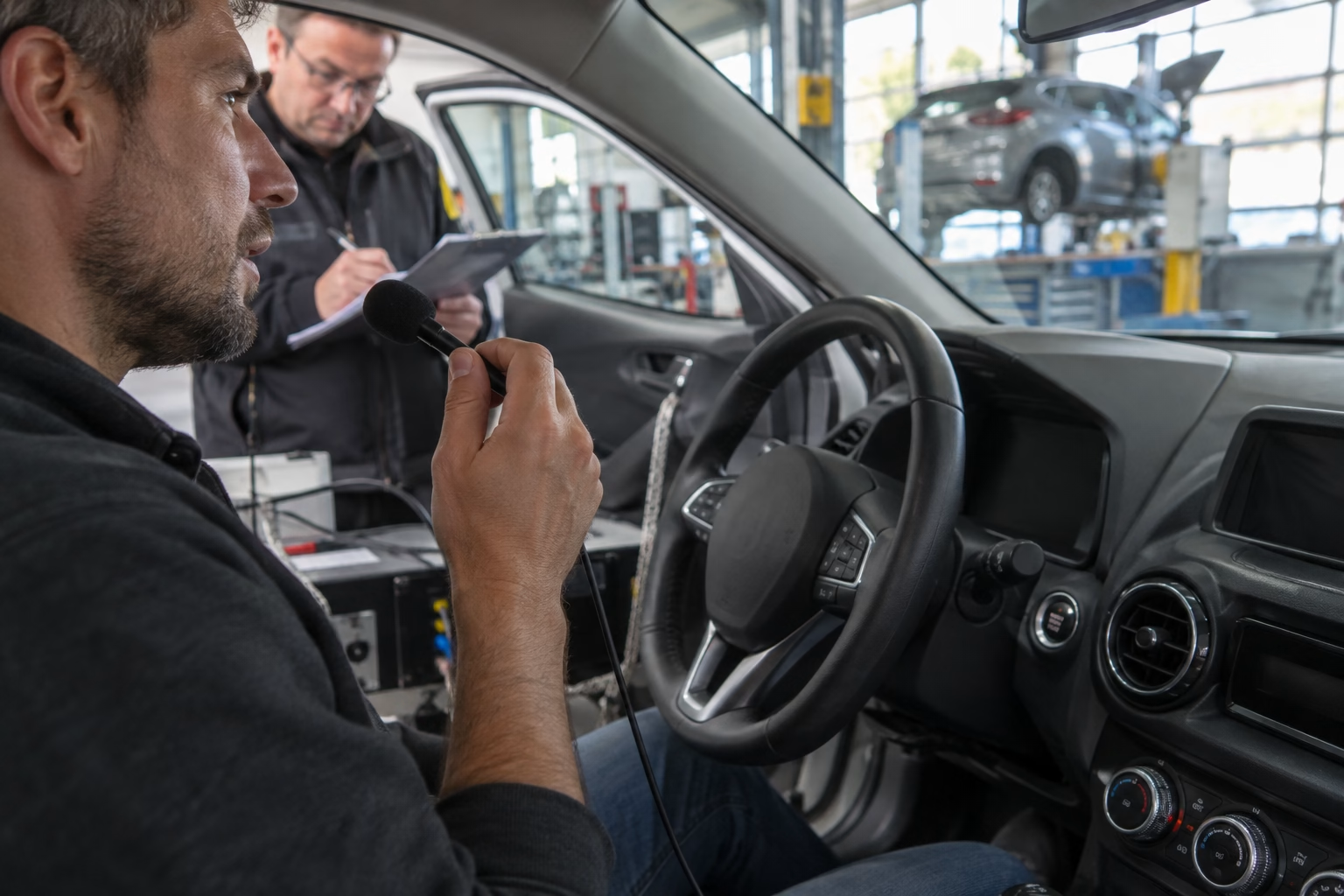
The results highlight that many voice assistants are capable of recognizing requests related to entertainment but show difficulties when the command concerns equipment linked to safety and driving. The survey subjected each model to 18 operations, divided among infotainment, climate control, and visibility or assistance functions.
car voice command test: why it matters
The overall assessment was positive for 16 cars, fair for 14, sufficient for seven, and insufficient for three. Less than half of the tested vehicles therefore reached the highest level in the general ranking, despite voice commands now being present on models belonging to various segments.
The BMW Series 5 distinguished itself by achieving the best result, successfully completing 16 out of 18 requests. At the opposite extreme, the Suzuki e-Vitara executed only three. This difference demonstrates how much the effectiveness of these systems depends on specific integration for each vehicle: the mere presence of a voice assistant does not guarantee extended control over car functions.
Infotainment is the area where the technology appears most mature, with 35 models obtaining at least a good rating. The figure drops to 26 cars for climate control, while in the category dedicated to visibility and assistance, most of the tested vehicles do not reach sufficiency. Effectiveness therefore varies based on the type of operation requested, even within the same automobile.
What changes and what are the effects
Particular criticalities were found in the Dacia Duster and Dacia Jogger models, where the dedicated voice button controls only a connected smartphone, without allowing direct access to car functions. Interaction therefore depends on services available on the phone and is separate from onboard systems, limiting the number of operations executable without using traditional controls.
ADAC emphasizes that voice control is particularly useful for complex activities, such as entering a destination in the navigator, as it allows reducing time spent interacting with displays and menus. However, for essential functions, the technology is still too unreliable to replace immediately accessible buttons and levers: physical controls therefore remain necessary when an action must be performed quickly and without relying on correct phrase recognition.
Source and further reading on car voice command test: original article.
* Content created with the assistance of artificial intelligence systems.