 Hardware Ready Ready to Bench?
The Mac Studio M4 Max is currently available for purchase in Italy at an indicative price ranging from €2,500 to €2,900 for the base configuration. The Mac Studio M5 Max, on the other hand, is only available for pre-order with its Italian debut set for September 22, 2026, leaving an eight-day wait compared to September 14, 2026.
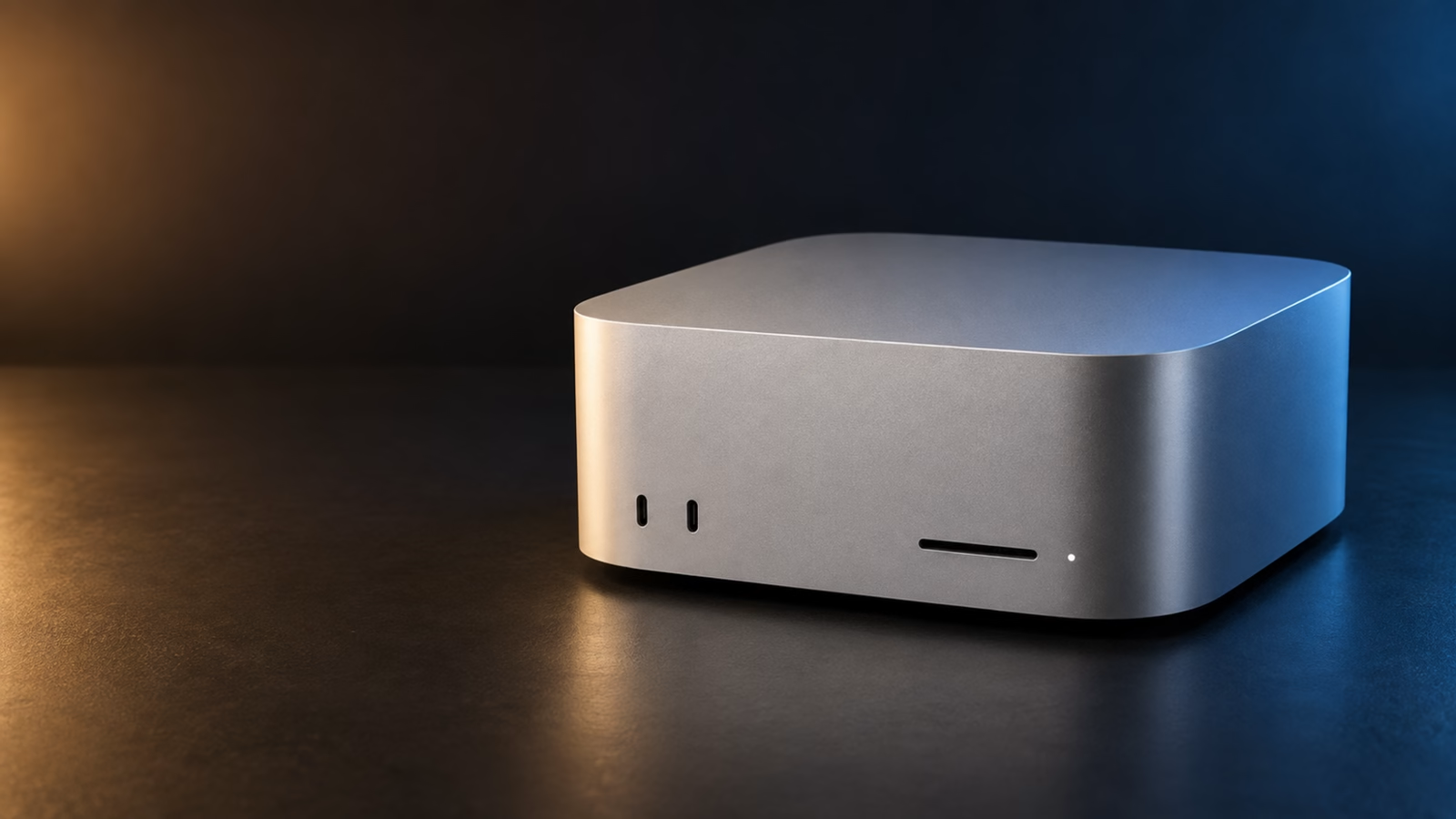
The base configuration of the Mac Studio M4 Max includes a 14-core CPU, a 32-core GPU, 36 GB of unified memory, and a 512 GB SSD. The chip offers hardware acceleration for H.264, HEVC, ProRes, and ProRes RAW, making it suitable for video editing, multimedia content management, and use in compact macOS workstations.
Mac Studio M4 Max: why it matters
The four rear Thunderbolt 5 ports, 10 Gb Ethernet, and SDXC card reader allow you to connect external storage, fast networks, and camera cards. These features are already present in the current model and will retain their utility even with the arrival of the successor.
Before purchasing, it is important to verify that the base tier meets your needs. A 512 GB SSD may require attention if you plan to store many video files or work libraries, and any external storage should be considered in the overall budget.
The current price of the Mac Studio M4 Max, ranging from €2,500 to €2,900, significantly influences the purchase decision. If the base model is found near the lower limit, it can represent a reasonable choice for those who have already verified that the CPU, memory, and connections meet their needs. As the price approaches the upper limit, with the successor arriving soon, advancing the purchase requires stronger justification.
The price difference between the two extremes is approximately €400, a significant amount that can impact the budget for purchasing an external SSD or other peripherals. This represents a concrete economic advantage of the lower price, rather than a promise of further reductions.
Apple has officially announced the Italian release of the Mac Studio M5 Max for September 22, 2026, and opened pre-orders. Available configurations include a base model with an 18-core CPU, 32-core GPU, 36 GB of unified memory, and a 512 GB SSD.
The comparison between the two models highlights an increase in CPU cores in the M5 Max (18 versus 14 for the M4 Max base), while memory quantity, SSD capacity, and graphics core count remain unchanged. From these data points, it is not possible to directly derive a percentage improvement in application performance, but those running compilations or processing tasks that leverage many cores may benefit from the new model.
What Changes and What Are the Effects
Immediate purchase of the Mac Studio M4 Max is advisable for those who find the base model near €2,500, require 36 GB of memory, and use applications compatible with the platform. The contained price justifies the purchase even close to the launch of the new generation.
Another concrete situation that might favor immediate purchase is a failure in your current workstation or a work deadline requiring computer receipt before September 22. In such cases, the value of recovered working days can justify an expenditure closer to €2,900, provided availability, shipping times, and the time needed to transfer applications and projects are verified.
Those who own a still-functioning computer and can postpone the purchase beyond the launch should wait for the Mac Studio M5 Max. Eight days represent a short interval for a machine intended to remain in use for years, especially if the M4 Max quote approaches €2,900.
Therefore, it is recommended to wait for the Mac Studio M5 Max for planned purchases, comparing configuration and delivery times before placing an order. Purchasing the M4 Max model is advisable only if found at a price near €2,500 and already adequate for your needs, or if early receipt avoids concrete downtime.
Source and further reading on Mac Studio M4 Max: original article.
* Content created with the assistance of artificial intelligence systems.