 Hardware Ready Ready to Bench?
plastic to cookies yeast. Researchers at Southern Illinois University Carbondale have developed a process that employs yeasts to transform substances derived from plastics and agricultural residues into food ingredients, used in the production of cookies called Bites. The results were presented at the American Chemical Society’s fall meeting: the project’s goal is to recover waste and produce food in places where supplies are difficult to obtain, including deep space missions.
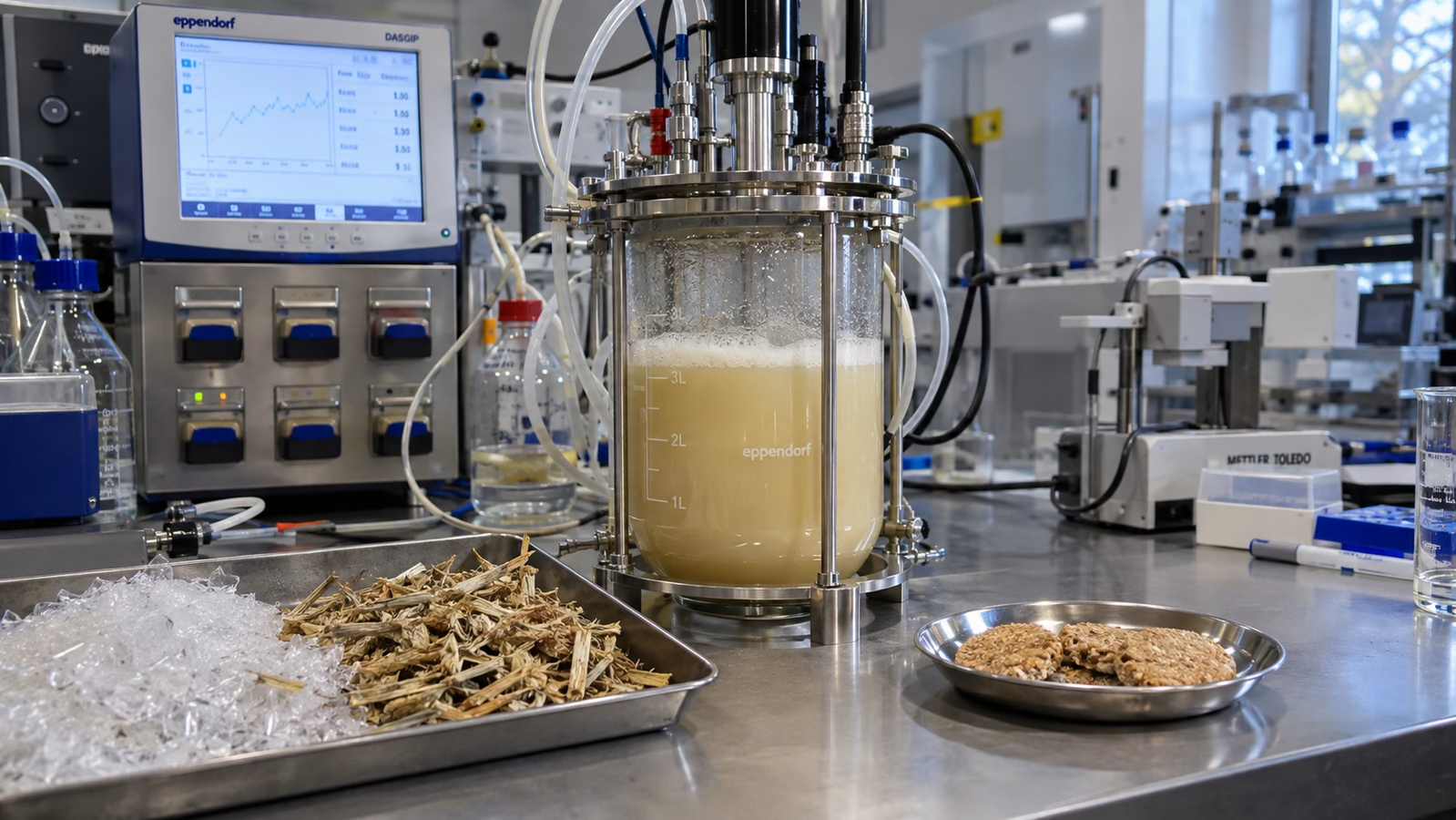
The work, led by associate professor Lahiru Jayakody along with researcher Sandhya Jayasekara, focuses primarily on polyethylene terephthalate (PET), the plastic commonly used for water and soda bottles. This plastic contains carbon-rich molecules that can be broken down and employed as raw material for biological transformations.
plastic to cookies yeast: why it matters
The process leverages the ability of microorganisms to reorganize carbon into new substances. Before using the yeasts, the group treats PET, corn stalks and leaves, and other biomass through a proprietary technique called oxidative hydrothermal dissolution. Developed by Professor Ken Anderson from the university, this technique combines water and oxygen at high temperature and pressure.
The treatment breaks down more resistant materials into smaller compounds accessible to microbial metabolism: it is the step that prepares the waste for subsequent conversion. Transforming carbon from waste into food ingredients could reduce dependence on supplies in deep space missions.
At that point, various genetically modified yeasts come into action, including those used in baking. The researchers programmed their biochemical activities so that they use molecules obtained from waste to produce food components, including proteins, fats, and acids.
The approach applies a principle already employed in biotechnology to waste recovery: entrusting the manufacture of useful substances to appropriately modified microorganisms. Jayasekara has also developed strains capable of obtaining specific ingredients from different raw materials. One yeast, for example, produces a vanilla aroma starting from plant biomass.
What changes and what are the effects
Another strain instead uses ethylene glycol derived from PET to synthesize beta-carotene, a substance that the human body can convert into vitamin A. The project therefore includes both nutritional components and molecules that contribute to flavor.
To prepare the Bites, it is currently necessary to separately add starch, fibers, and sweetener, ingredients that the group would like to have produced by the same microorganisms in the future. According to researchers, available data indicate that the cookies are safe to eat, but institutional authorization is still awaited to conduct formal taste tests on the prototypes described at the congress.
The research stems from a NASA-led project to produce food under the limited resource conditions of space exploration and was funded through the Deep Space Food Challenge and an NSF CAREER grant. Among the applications envisioned by the group are submarines, disaster-stricken areas, and settlements on the Moon or Mars, where local production could reduce dependence on food deliveries.
Source and further reading on plastic to cookies yeast: original article.
* Content created with the assistance of artificial intelligence systems.