 Hardware Ready Ready to Bench?
AMD openSIL. AMD has announced that the openSIL project has now entered the production phase with EPYC Venice processors. This initiative introduces a new approach to silicon initialization code before operating system boot, based on open libraries integrable into platform firmware.
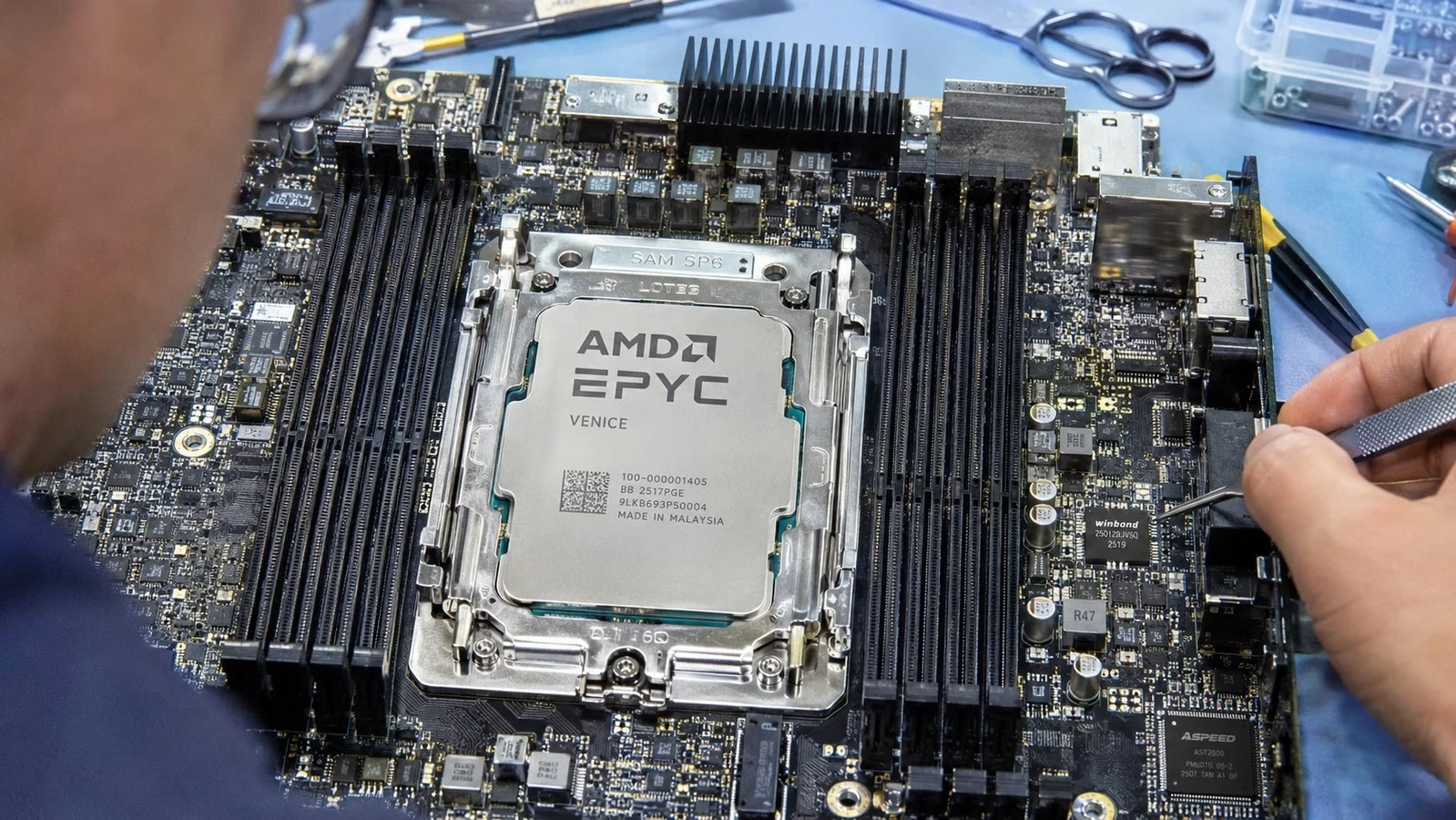
openSIL aims to replace the traditional AGESA (AMD Generic Encapsulated Software Architecture) architecture, which provides the code necessary to prepare hardware for subsequent boot stages. The new approach reorganizes this function through libraries written in C language, compilable directly or statically linked to firmware.
AMD openSIL: why it matters
The openSIL architecture consists of three main components: xSIM for silicon initialization management, xPRF which collects functions dependent on platform configuration (such as GPIO programming), and xUSL, which offers utilities shared by the other two libraries. This division separates processor code from motherboard-specific project adaptations.
AMD highlights how openSIL allows separating silicon initialization from host firmware, offering greater possibilities for code integration and verification. The same base can be integrated with both UEFI and coreboot, thanks to a protocol-independent setup.
For developers and firmware verifiers, the open code offers the ability to inspect the implementation and monitor changes. AMD has indicated as project goals increased test coverage, vulnerability tracking, and better identification of software components present in binaries through Software Bill of Materials (SBOM).
What changes and what are the effects
The public path for openSIL began with a demonstration on fourth-generation EPYC processors, using a reference platform called Onyx. The repository roadmap planned three evaluation phases and a production phase with UEFI firmware. Reaching production with Venice does not imply that the public demonstrative branch becomes immediately usable or that all motherboards receive an alternative BIOS.
The project repository is released under MIT license and documents compilation with tools such as GNU GCC, LLVM Clang, and Microsoft Visual C. The libraries can be built for 32- or 64-bit environments; for integration into previous AGESA-based UEFI implementations, a separate component named opensil-uefi-interface is available.
Source and further reading on AMD openSIL: original article.
* Content created with the assistance of artificial intelligence systems.