 Hardware Ready Ready to Bench?
Starcloud, a US startup founded in January 2024 and supported by NVIDIA, has announced its intention to bring the first ASICs dedicated to Bitcoin mining into orbit. The company, led by CEO Philip Johnston, plans to use the Starcloud-2 satellite as a test platform.
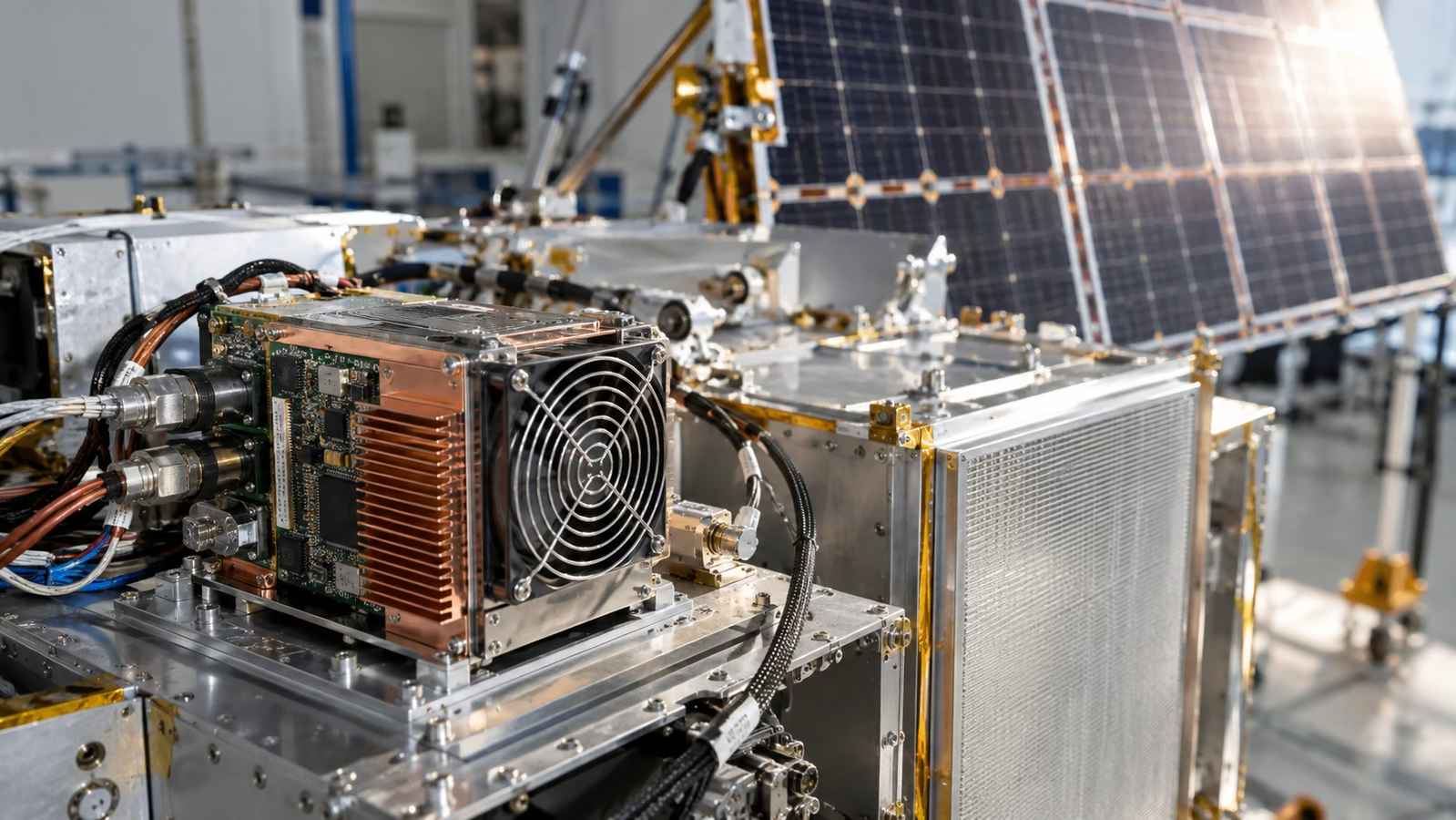
The launch, initially scheduled for the end of 2026, has been postponed to early 2027. The idea behind the project is to leverage the nearly uninterrupted solar energy available in a sun-synchronous orbit, effectively making electricity free once the hardware is operational.
Bitcoin mining in space: why it matters
According to industry operators, energy costs represent between 60% and 80% of total expenses for a mining company. This percentage has increased further following the April 2024 halving, which reduced the block reward to 3.125 BTC.
With an industrial rate around $0.07 per kWh, producing a single Bitcoin can cost between $32,000 and $59,000, depending on the efficiency of the machines used; with US residential rates, the cost exceeds $80,000. The Cambridge Index estimates that the Bitcoin network consumes approximately 140 TWh per year.
Starcloud, which began as a project for orbital data centers, has highlighted that a one-kilowatt ASIC costs about $1,000, compared to $30,000 for an NVIDIA B200 GPU with the same power draw. The company plans to pair the ASICs with Blackwell chips and AWS blades to maximize profitability, utilizing the machines even when AI compute demand decreases.
A crucial technical aspect is cooling: in space, the vacuum prevents convection and requires the use of radiators to dissipate heat into infrared. The radiating surface area, operating temperature, and material properties influence heat dissipation capacity, impacting the satellite’s overall mass.
What changes and what are the effects
Some economic uncertainties remain: ASICs have a shorter lifespan than GPUs and require a shorter amortization period. Furthermore, on Earth, using flared gas from oil wells allows for electricity at lower costs, between two and three cents per kWh.
Starcloud, which raised $170 million in March 2026 with a valuation of $1.1 billion, is not the only company pursuing similar projects: Google is also working on Project Suncatcher with TPUs and optical links between satellites. 2027 will be a decisive year to determine whether orbital computing represents a concrete business opportunity or merely a technological demonstration.
Source and further reading on Bitcoin mining in space: original article.
* Content created with the assistance of artificial intelligence systems.