 Hardware Ready Ready to Bench?
RNA prostate cancer resistance. A group of researchers from the Fred Hutch Cancer Center has identified a molecule that appears to contribute to regulating therapy resistance in prostate cancer: tRNA₁Arg(UCU), a specific type of transfer RNA. The study, published in Nature, demonstrates that reducing its quantity can induce a change in tumor cell identity, while restoring its levels in experimental models can render them sensitive again to targeted treatments against the androgen receptor.
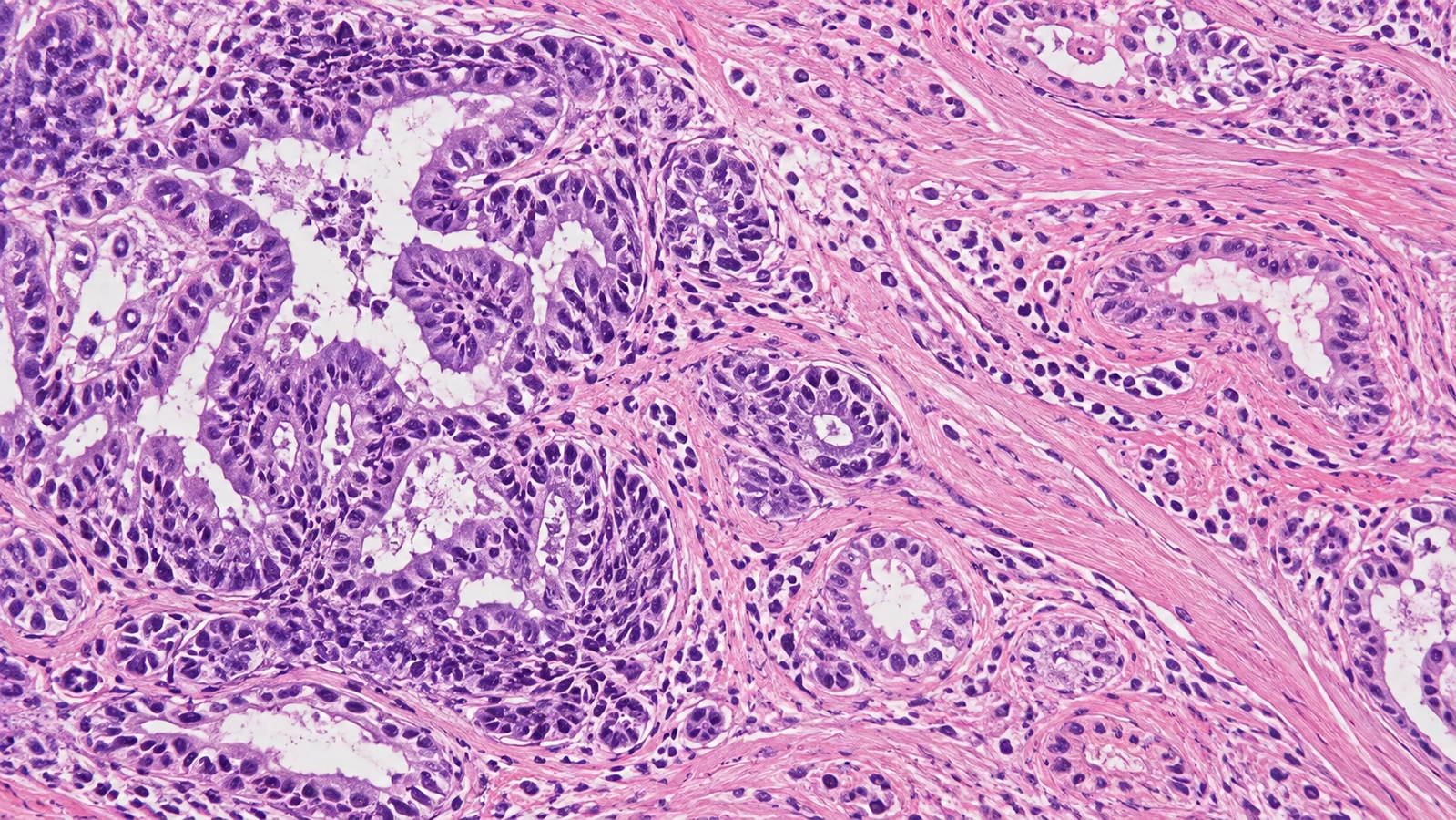
Prostate cancer frequently depends on the androgen receptor, a protein through which cells respond to signals from male sex hormones. Therapies that block this biological pathway counter tumor growth, but some cells can develop resistance by acquiring different characteristics and decreasing their dependence on this receptor.
RNA prostate cancer resistance: why it matters
This ability to modify its own state, defined as cellular plasticity, can lead to neuroendocrine differentiation or other resistant states. The loss of genes such as TP53, PTEN, or RB and the use of second-generation inhibitors of the androgenic pathway have already been linked to these transitions.
tRNAs (transfer RNAs) intervene in protein production: they transport amino acids to the ribosome and allow the decoding of instructions contained in messenger RNA. Not all tRNAs are identical; they can carry the same amino acid but recognize different codons, or share an anticodon and differ in the rest of the sequence. In mammals, there are approximately 300 variants of this type, called isodecoders. Their abundance varies among different tissues and cell types, suggesting functions more complex than simply supplying the proteins necessary for assembly.
The study highlights that restoring a single tRNA can return tumor cells to a drug-sensitive state. Through small RNA sequencing, researchers identified tRNA₁Arg(UCU) as a regulator of cellular transitions and drug response. Experiments demonstrated that modifying the quantity of this tRNA altered cell dependence on the androgenic pathway; restoring its level increased sensitivity to therapies targeting this pathway.
In parallel with research on DNA footprints associated with prostate cancer aggressiveness, an additional regulatory level linked to protein production emerges. The study also identifies two proteins, TARDBP and ZSCAN29, which control the expression of this tRNA by binding directly to the DNA region corresponding to its gene.
What changes and what are the effects
Downstream of the tRNA’s action, researchers identified a protein synthesis program centered on SWI/SNF complexes, which remodel chromatin – the structure in which DNA is organized. Specifically, the tRNA controls the production of SMARCC2, a component of these complexes. This connection helps explain how a variation in genetic instruction decoding can influence programs that maintain tumor cell identity.
In patients with prostate cancer, tRNA expression is reduced in neuroendocrine prostate carcinoma, and its loss is associated with faster metastasis and lower overall survival. These clinical observations describe an association between the two factors, while experiments identified a modifiable mechanism in the studied models.
The recovery of drug sensitivity remains currently an experimental result and not a therapy already proven effective on patients.
Source and further reading on RNA prostate cancer resistance: original article.
* Content created with the assistance of artificial intelligence systems.